

Educational Kits
Educational Kits
Educational kits can be made of four different materials: carbon steel, stainless steel, aluminum and 3D printed resin. Our 3D printed resin kits weigh just 3.5 kg, making them over 70% lighter than their carbon steel counterpart, and are easier to handle, transport and store. All educational kits are presented in a durable polypropylene carry case with high-density foam inserts to ensure total protection of the specimens.
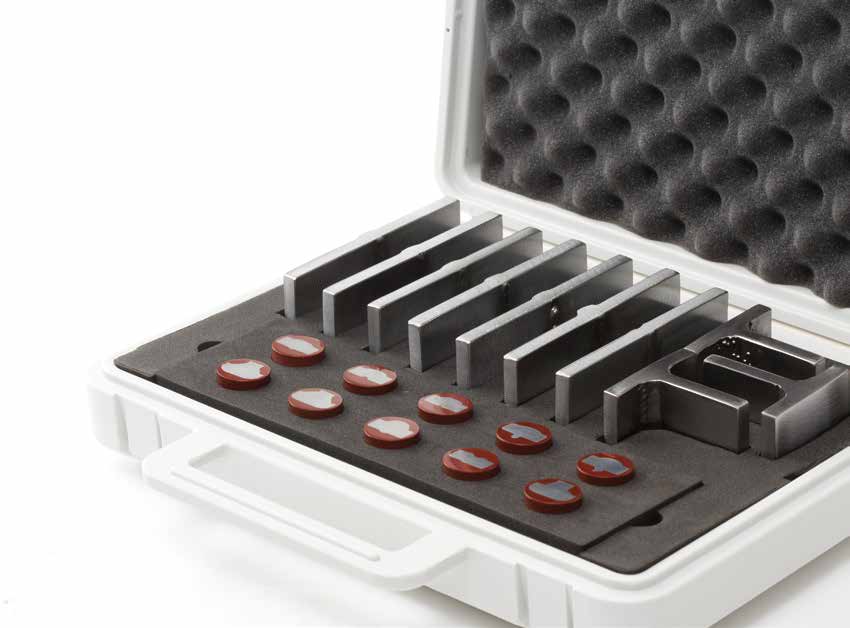
Fot: Visual Kit contains 10 macro section of varous flaws
Recommended for
- Introduction to weld flaws
- Demonstration of principles of flaw detection
- Demonstration of typical flaw responses
- Demonstration of principles of flaw interpretation
- Basic flaw sizing
Kit contents
- 10 miniature flawed specimens, each implanted with one flaw
- Flaw location details
- Testing and acceptance criteria
- Photo-radiographs (where applicable) for each specimen
- 10 macro sections
- Magnifying glass
- Certificate of conformance
Methods
- Demonstration kit containing a specimen for each method
- Ultrasonic testing
- Magnetic particle testing
- Liquid penetrant testing
- Visual testing
- Radiographic testing
Materials
- Carbon Steel
- Stainless Steel
- Aluminium
- 3D printed resin
Kit types and contents
Demonstration kit (KTCS91)
1 tee and 9 plate specimens carefully selected from the visual, magnetic, penetrant, ultrasonic, and radiographic kits to provide an overview of flaw types and their detection using various non-destructive testing techniques.
- Carbon steel – 12 kg (29 lbs)
Ultrasonic kit (KTCS86)
1 tee and 9 plate specimens containing commonly occurring surface-breaking and weld-body flaws.
- Carbon steel – 12 kg (26 lbs)
- Stainless steel – 12 kg (26 lbs)
- Aluminum – 7 kg (15 lbs)
Visual kit (KTCS87)
3 tee and 7 plate specimens containing commonly occurring visual welding flaws and irregularities.
- Carbon steel – 12 kg (26 lbs)
- 3D printed resin – 3.5 kg (7.7 lbs)
Magnetic particle kit (KTCS88)
3 tee and 7 plate specimens containing commonly occurring surface-breaking flaws.
- Carbon steel – 12 kg (26 lbs)
Liquid penetrant kit (KTCS89)
3 tee and 7 plate specimens containing commonly occurring surface-breaking flaws.
- Carbon steel – 12 kg (26 lbs)
- Stainless steel – 12 kg (26 lbs)
- Aluminum – 7 kg (15 lbs)
Radiographic kit (KTCS90)
1 tee and 9 plate specimens containing commonly occurring surface-breaking and weld-body flaws.
- Carbon steel – 12 kg (26 lbs)
- Stainless steel – 12 kg (26 lbs)
- Aluminum – 7 kg (15 lbs)
Weld flaw identification kit (KTCS92)
30 macro sections showing the cross section of flaws.
- Carbon steel – 7 kg (15 lbs)
| MT KIT | PT KIT | VT KIT | Demo KIT | UT KIT | RT KIT | Weld ID KIT | ||||
| Def 1 | Toe Crack | |||||||||
| Def 1A | Toe Crack | |||||||||
| Def 1B | Toe Crack | |||||||||
| Def 1C | Toe Crack (Full Pen) | |||||||||
| Def 2 | Root Crack | |||||||||
| Def 3 | Side Wall Crack | |||||||||
| Def 4 | Centre Line Crack Surface | |||||||||
| Def 5 | Centre Line Crack Weld Body | |||||||||
| Def 6 | Porosity Weld Body | |||||||||
| Def 6A | Porosity Surface Breaking | |||||||||
| Def 7 | Slag | |||||||||
| Def 8 | Lack of Side Wall Fusion | |||||||||
| Def 9 | Lack of Root Fusion | |||||||||
| Def 10 | Root Concavity | |||||||||
| Def 11 | Incomplete Root Penetration SV | |||||||||
| Def 12 | Excess penetration | |||||||||
| Def 13 | Incomplete Root Penetration DV | |||||||||
| Def 14 | Lamination | |||||||||
| Def 14A | Lamination Weld Preparation | |||||||||
| Def 14B | Lamination | |||||||||
| Def 15 | Irregular Root Penetration | |||||||||
| Def 16 | Weld Spatter | |||||||||
| Def 17 | Undercut | |||||||||
| Def 18 | Excess Cap | |||||||||
| Def 19 | Mismatch Plate | |||||||||
| Def 20 | Misalignment Plate | |||||||||
| Def 21 | Crack Surface Breaking | |||||||||
| Def 21A | Crack Subsurface Cap Removed | |||||||||
| Def 22 | Concave Cap | |||||||||
| Def 22A | Incomplete Weld Fill | |||||||||
| Def 23 | Uneven Leg Lengths | |||||||||
| Def 26 | Lack of Inter Run Fusion | |||||||||
| Def 27 | Underflush |
2024 © Copyright Casp System Sp. z o.o.
Realizacja BeamIT